Memorising Pi
The first hundred digits, three methods in rising order of power, and a plan that puts fifty picture-pegs on a route through your own home.
Pi is the number people memorise to prove a point. It has no pattern, it never ends, and everyone knows the first few digits, which makes the hundredth digit a small public miracle. It is also the best possible training number: a technique that works for pi works for every number, because pi is as random as digits get.
This article gives the first hundred digits, three ways to learn them in increasing order of power, and a plan that gets a beginner to a hundred digits in a week and points the way to a thousand. The hundred-digit version is the one to aim for first. It takes most people a few evenings, and it is the point at which you stop being someone who "can't remember numbers".
The first hundred digits
Here they are, in groups of ten, which is how you should read them and never how you should memorise them.
3. 1415926535 8979323846 2643383279 5028841971 6939937510 5820974944 5923078164 0628620899 8628034825 3421170679
Most people know 3.14159 already. The leading 3 needs no technique; you will never forget that pi starts with three, so every method below begins at the first decimal, the 1.
Method one: rhythm and chunks
The way almost everyone starts, and the way almost everyone stalls. You group the digits into threes or fours, say them aloud with a rhythm, and repeat. It works to about twenty or thirty digits, because your ear can hold a short tune, and then it stops working, because a tune with forty verses is not a tune. It also has the worst failure mode: when a chunk goes, everything after it goes with it, and there is no way to get back in.
Use it for the first ten digits if you like; the rhythm of "one-four-one-five-nine, two-six-five-three-five" is pleasant and most people have half of it already. Then switch.
Method two: pi poems
A piem is a sentence in which the number of letters in each word gives the next digit. The most famous begins: How I need a drink, alcoholic in nature, after the heavy lectures involving quantum mechanics. Count the letters: How (3), I (1), need (4), a (1), drink (5), alcoholic (9), in (2), nature (6), after (5), the (3), heavy (5), lectures (8), involving (9), quantum (7), mechanics (9). That is 3.14159265358979, fifteen digits, in one memorable sentence.
Piems are charming and the hobby of writing them (piphilology) is older than memory sport. There are piems that run to hundreds of digits, including whole short stories in which a ten-letter word stands for zero. They are, however, a poor way to learn a long run of digits, for a reason that becomes obvious the first time you try to recall the fortieth word of a poem: you are memorising a text, which is at least as hard as the number, and then decoding it letter by letter at recall. Learn the famous fifteen-digit one because it is a good party piece. For the other eighty-five, use pictures.
Method three: pictures on a route
This is how everyone who knows more than a hundred digits does it. You need two things you may already have from other articles on this site.
A peg word for every two-digit number, from the Major System, so that 14 is a tire, 15 is a towel, 92 is a pen and so on for all hundred pairs. If you do not have these yet, the chart lists one for every number, and you do not need all hundred to start: the first twenty digits of pi use only ten of them.
A route with places on it, from the Method of Loci: a fixed path through somewhere you know, with numbered spots. Ten spots hold twenty digits; fifty spots hold a hundred.
Then you pair off the digits and place one image per spot. The first twenty decimals of pi are 14 15 92 65 35 89 79 32 38 46. Using this dictionary's pegs, that is:
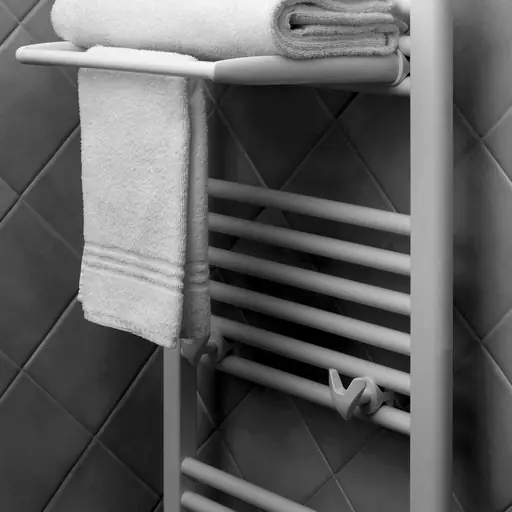

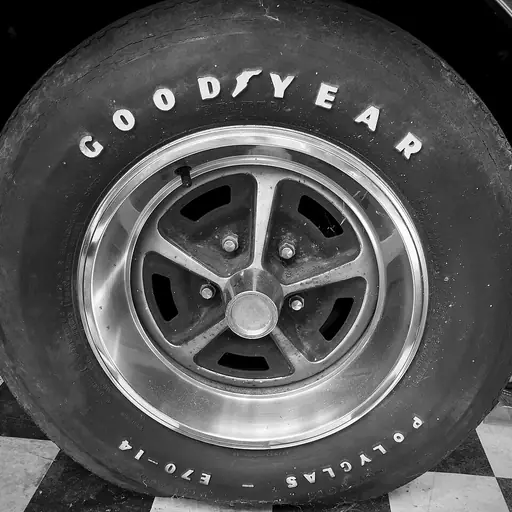
and then a shell (65), a mule (35), a key fob (89), a cap (79), the moon (32), a movie (38) and a rash (46). Walk your route and put them down: a tire rolling through your front door, a towel draped over the coat hook, a pen stabbed into the hall table, a shell on the light switch, a mule in the kitchen doorway, a key fob dangling from the tap, a cap on the kettle, the moon in the fridge, a movie playing on the oven door, a rash spreading across the kitchen table. Make each one interact with its spot, the way the link method joins two images.
Recall is a walk. Front door: tire, T-R, 14. Coat hook: towel, T-L,
- The pegs decode themselves, because the Major System is
reversible; you never have to remember that the tire "means" 14, you read the consonants off it. That property is the reason Major pegs, rather than arbitrary pictures, are the right tool for a long number.
Twenty digits placed this way take about five minutes for a beginner and survive the night. The next twenty (26 43 38 32 79, 50 28 84 19 71: a notch, a ram, a movie again, the moon again, a cap again, lace, a knife, fire, tape, a cat) go on the next ten spots. Notice the repeats: 38, 32 and 79 all appear twice in the first forty digits. That is fine, and it is the reason the spot matters as much as the peg. A movie on the oven door and a movie in the bathroom mirror are two different memories.
The first hundred digits, pegged
Here is the whole first hundred as fifty pegs from this dictionary's chart, so that you can start placing tonight without looking anything up. The spot numbers are yours to fill in; the encoding column is there so you can check any peg by reading its consonants. Every peg links to an entry page with alternatives, and if one of these words does not produce a picture for you, swap it for one that does before you place it.
| Spot | Digits | Sounds | Peg |
|---|---|---|---|
| 1 | 14 | T·R | tire |
| 2 | 15 | T·L | towel |
| 3 | 92 | P·N | pen |
| 4 | 65 | Sh·L | shell |
| 5 | 35 | M·L | mule |
| 6 | 89 | F·P | fob |
| 7 | 79 | K·P | cap |
| 8 | 32 | M·N | moon |
| 9 | 38 | M·F | movie |
| 10 | 46 | R·Sh | rash |
| 11 | 26 | N·Sh | notch |
| 12 | 43 | R·M | ram |
| 13 | 38 | M·F | movie |
| 14 | 32 | M·N | moon |
| 15 | 79 | K·P | cap |
| 16 | 50 | L·S | lace |
| 17 | 28 | N·F | knife |
| 18 | 84 | F·R | fire |
| 19 | 19 | T·P | tape |
| 20 | 71 | K·T | cat |
| 21 | 69 | Sh·P | ship |
| 22 | 39 | M·P | map |
| 23 | 93 | P·M | poem |
| 24 | 75 | K·L | coal |
| 25 | 10 | T·S | toes |
| 26 | 58 | L·F | leaf |
| 27 | 20 | N·S | nose |
| 28 | 97 | P·K | puck |
| 29 | 49 | R·P | rope |
| 30 | 44 | R·R | rower |
| 31 | 59 | L·P | lip |
| 32 | 23 | N·M | name |
| 33 | 07 | S·K | sock |
| 34 | 81 | F·T | fat |
| 35 | 64 | Ch·R | chair |
| 36 | 06 | S·Ch | sash |
| 37 | 28 | N·F | knife |
| 38 | 62 | Ch·N | chain |
| 39 | 08 | S·F | safe |
| 40 | 99 | P·P | pipe |
| 41 | 86 | F·Sh | fish |
| 42 | 28 | N·F | knife |
| 43 | 03 | S·M | sumo |
| 44 | 48 | R·F | roof |
| 45 | 25 | N·L | nail |
| 46 | 34 | M·R | mower |
| 47 | 21 | N·T | knot |
| 48 | 17 | T·K | tack |
| 49 | 06 | S·Ch | sash |
| 50 | 79 | K·P | cap |
A note on the pairs that begin with zero. In this dictionary the single-digit entries (3, 6, 7, 8) are pegged as one sound, so 07 is listed as a key and 03 as "Ma". Inside pi you want every peg to be two sounds so that a zero is never silently dropped, which is why the table gives 07 as a sock (S·K), 06 as a sash (S·Ch), 08 as a safe (S·F) and 03 as a sumo (S·M). Any word that starts with an S sound and ends with the second digit's sound will do; pick your own if these do not picture well.
Notice, too, how much the second fifty repeats: knife appears three times, cap and sash and movie and moon twice each. Twelve of the fifty spots hold a peg that appears elsewhere on the route. This is the ordinary texture of a random number and it is why the interaction between peg and spot is what you should spend your effort on. A knife stabbed into the sofa, a knife in the toaster and a knife stuck in the bathroom door are three memories; three knives with no spot are one blur.
Getting to a hundred
Fifty pegs on fifty spots. If you have the full chart in your head this is an afternoon's work; if you are learning the pegs as you go it is a week, and a productive one, because you will finish it knowing half the Major System.
Three practical notes.
Place in batches of ten spots, and recall each batch before adding the next. Twenty digits at a time, tested, is far better than a hundred placed in one sitting and tested at the end, because the error you make at digit thirty will otherwise be baked into everything after it.
Number your spots. When you can say "spot thirty-one is the bathroom mirror" you can jump straight to the sixty-first digit, which is what people will ask you to do, and it is also how you find and repair a gap without walking the whole route.
Test by writing, not by reciting. Write the digits out from the walk, then compare with the list. Reciting aloud lets you skate over a hesitation; writing does not.
Beyond a hundred: more digits per spot
Fifty spots for a hundred digits is comfortable. Five hundred spots for a thousand is not, and nobody does it that way. Instead you put more digits at each spot.
Three-digit pegs. A peg for every number from 000 to 999 puts three digits at each spot; a thousand digits needs 334 spots. This dictionary has a three-digit table, block by block, starting at 000 to 099, and the numbers practice drills it.
Person-Action-Object. The technique from card memorisation, where one image is a person doing an action to an object and each part encodes two digits, gives six digits per spot: a thousand digits in 167 spots, which is a large house or a short walk. This is how competitive number memorisers work, and it is the far end of the PAO article.
Two pegs per spot. The lazy middle option, and a good one: put two two-digit images at each spot, interacting, so that four digits share a place. A hundred digits in twenty-five spots, no new system to learn.
The pi journey on this site is built around exactly this progression. Stage one is the first hundred digits on fifty two-digit pegs; the later stages go to five hundred, a thousand, two thousand and finally 3,141 digits, and you choose whether to encode with two-digit pegs, three-digit pegs or PAO. Each chunk is tracked separately, so the ones you keep dropping come back for review sooner than the ones you have.
Keeping it
Digits placed on a route will fade like anything else unless they are walked again. The schedule that works for most people is: the same evening, the next day, three days later, a week later, then monthly. Each walk takes a fraction of the time the placing took. After the monthly stage, the first hundred digits are effectively permanent; people who did this a decade ago can still do it, slowly, with no practice since.
If a spot gives you nothing on a walk, do not guess. Look up the digits, rebuild the image at that spot with more interaction, and walk the whole batch again. A repaired image nearly always holds; a guessed one has to be repaired later anyway.
A one-week plan
Day one. Learn the ten Major digit sounds from the chart. Place the first twenty digits on ten spots using the pegs above. Test by writing them out.
Day two. Recall yesterday's twenty before looking. Learn the ten pegs for digits twenty-one to forty and place them on the next ten spots. Test all forty.
Day three. Recall forty. Place digits forty-one to sixty.
Day four. Recall sixty. Place sixty-one to eighty.
Day five. Recall eighty. Place eighty-one to a hundred. Test all hundred by writing them out, and note every hesitation.
Day six. Repair the hesitations. Walk the whole route twice.
Day seven. Write out a hundred digits of pi from memory, in front of someone if possible. Then decide whether you want a thousand.
Reciting under pressure
Memorising a hundred digits and reciting them to a room are different skills, and the second one has its own failure modes.
Do not start fast. The first spots are the ones you know best and the temptation is to rattle them off; then you arrive at spot eleven at a pace the images cannot sustain and lose the thread. Walk the route at the speed of the slowest spot from the first digit.
Say the digits in pairs. "One-four, one-five, nine-two" matches the way you encoded them, and it hides the tiny pause while you decode the next peg. Listeners hear a rhythm, not a search.
If a spot is blank, say so and move on. You can jump to the next spot because your spots are numbered; give the two digits you cannot see as "two digits I've lost" and continue. A hundred digits with one gap is a good recital, and the gap will usually come back a few spots later, when a neighbouring image jogs it.
Practise the recital, not just the memorising. Two or three walks aloud, timed, in the days before you plan to do it for someone. A hundred digits should take under a minute once it is fluent.
Why bother
Nobody needs a hundred digits of pi. People memorise it because it is a clean, unarguable test of whether a technique works, and because the feeling of writing out a hundred random digits from a walk through your own kitchen is a small, permanent change in what you believe about your memory. The current Guinness record stands at seventy thousand digits, recited over nearly ten hours, and there are credible unofficial claims well beyond that; those people are not built differently from you. They have more spots, more digits per spot, and more evenings. The first hundred is where all of them started.
The canonical Major System ships with Major Dictionary as a starter system you can edit, override, and drill against. One click to adopt; the system joins your dictionary and the practice surfaces light up.