Person · Action · Object
Three images per locus. The encoding behind every modern card-memorisation record.
The Method of Loci gives you a place to store data. The Major System gives you a way to encode digits into things that fit on shelves. PAO (short for Person, Action, Object) is the trick that lets you fit three things on one shelf instead of one, and it is the technique behind every world-record deck of cards memorisation since the early 2000s.
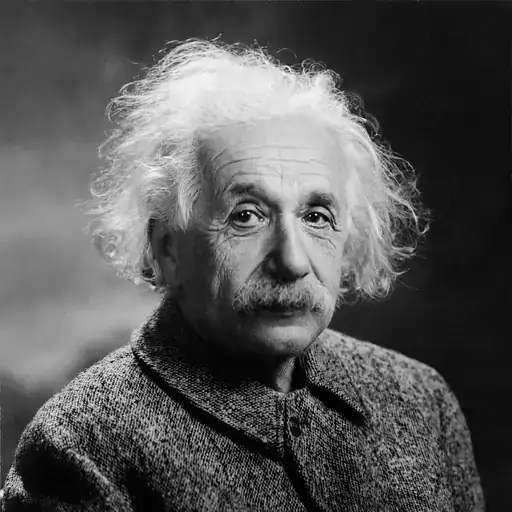
PAO is a multiplier. It is what happens when you decide that one locus, one image, one peg word is no longer enough, that the substrate of human memory is generous, and you should pack more in. It is also the technique most likely to make a person doing it look, to a bystander, like they are mildly out of their mind. There is no discreet way to memorise a deck of cards by imagining Albert Einstein scribbling on a chalkboard inside your kitchen sink. You just have to commit.
The cards-as-a-deck problem
A standard deck has 52 cards. If you wanted to memorise the order of a shuffled deck using only the Method of Loci, you would need 52 loci (one per card) and 52 distinct images, one per face card. By the time you'd built that, you'd have a working palace; by the time you'd memorised the cards, you'd have spent forty minutes.
The world records for memorising a shuffled deck are held by competitors who routinely encode a full 52-card deck in under twenty seconds (at the top of the field, comfortably under fifteen). At that pace, the encoder is spending less than a third of a second per card: eyes on the card just long enough to register rank and suit, hands flicking through.
This is not possible with single-image encoding. There aren't enough quarter-seconds in twelve seconds for fifty-two distinct mental acts. The trick has to be that each "image" carries more than one card. PAO carries three.
The competitive history
Person-Action-Object encoding for playing cards became the standard technique at the World Memory Championships through the late 1990s and early 2000s. Andi Bell of the United Kingdom, who won the World Memory Championship in 1999, 2002, and 2005, was an early high-profile proponent of the technique; his speed on the cards discipline helped establish PAO as the dominant method for that event. By the mid-2000s, the technique had spread through the memory-sport circuit and was in near-universal use among top competitors.
The origin of the method is older than the competitive circuit, but its systematic form (one canonical Person, one Action, one Object per card, rigidly composed in triples) was formalised and disseminated primarily through that community. There is no single inventor; the technique emerged from an iterative refinement process across multiple competitors.
Today, the cutting edge has moved to double-PAO (six cards per locus) and PAO-2 (where each card encodes a person and an object, with the action coming from the second card in a pair), but plain PAO remains the dominant intermediate technique and the one almost everyone learns first.
How it works
Each card in the deck (there are 52) gets assigned a stable Person, Action, Object triple. For example:
The Ace of Spades, in the canonical Major Dictionary PAO list, is Albert Einstein (Person) scribbling (Action) on a chalkboard (Object). Each PAO is unique; no other card has Einstein, no other card has scribbling, no other card has the chalkboard.
Now, when you draw a card from a shuffled deck, you don't think "ace of spades" - you think Einstein. The mapping is automatic after a few hundred reps.
But the trick is that you don't use the full PAO when only one card is drawn. You compose three cards into a single image, like this:
- Card 1: Take the Person.
- Card 2: Take the Action.
- Card 3: Take the Object.
Three cards become one image: Person from card 1 doing Action from card 2 with the Object from card 3. That image goes on a single locus.
A worked example. Suppose the first three cards are:
- A♠ (Einstein, scribbling, chalkboard)
- K♥ (Cleopatra, kissing, scarab)
- 7♣ (Sherlock Holmes, smoking, magnifying-glass)
The composed image is Einstein kissing a magnifying-glass. (Or Einstein + Cleopatra's action + Sherlock's object: Einstein kissing a magnifying-glass.) That single image goes on locus 1 of your palace.
The next three cards become locus 2. Three more cards, locus 3. A deck of 52 cards becomes 17 composed images plus a 53rd-card remainder (which is just the Person of the last card, alone). 52 cards in 17 loci.
If you have a 17-locus palace memorised cold, and a 52-card PAO list memorised cold, you can encode a deck in seventeen quick walks-through-rooms. With practice, that's about a minute. The champions get it under fifteen seconds because their PAOs are so overlearned that the Person → Action → Object recovery is sub-conscious; they're seeing Einstein and the chalkboard in the same moment they see the rank-suit, with no intermediate deliberation.
Choosing your Persons
This is the hard part of PAO. You will be living with these 52 people for years; pick them with care.
The principle: make them maximally distinct from each other. If you have one Einstein, don't have a second physicist. If you have one Cleopatra, don't have a second monarch. The encoding works by recognition; the more your 52 People feel like 52 different silhouettes, the faster the recovery.
Some heuristics:
- Mix sources. Half historical figures, half pop culture. A
PAO with only US presidents is hard to disambiguate; one with Einstein, Beyoncé, Sherlock Holmes, Florence Nightingale, and Yoda is easy.
- Pick people whose silhouette is iconic. Hermione Granger
has a wand and a bushy hairstyle. Ron Swanson has a moustache and a steak. These are easier than two photogenic-but-similar actresses.
- Stay away from family and close friends. You will be
imagining them doing strange things 17 times per shuffled deck. It is faintly disturbing in a way that strangers and historical figures are not. (This is genuine advice.)
- Stay away from people you'll forget. That obscure jazz
musician you love might not work as a PAO if you can't picture him reliably. Pick the ones whose face you can summon without effort.
The Major Dictionary canonical PAO list is opinionated. We pick people that are visually distinct, culturally durable, and have at least one defining action you can pin them to. Einstein scribbles. Cleopatra kisses. Sherlock smokes. The list ships under the 52 cards system; you can adopt it as a starter set and edit people you'd rather replace.
The canonical PAO 52 cards ships with Major Dictionary as a starter system you can edit, override, and drill against. One click to adopt; the system joins your dictionary and the practice surfaces light up.
Choosing your Actions
Each Person needs a stable Action. The Action is what they're always doing in their PAO (the thing you'd describe them with in one verb if you only had one verb).
The principle: the Action must be visualisable and energetic. Static actions ("standing," "thinking") fail. Dynamic actions ("scribbling," "kissing," "throwing," "splitting") succeed.
Heuristics:
- One action per Person, never overlapping. If Einstein
scribbles, no one else scribbles. If Cleopatra kisses, no one else kisses. The Action has to be unique to the Person. That's what lets a deck of 52 give you 52 distinguishable verbs.
- The Action should fit the Person. Einstein scribbling is
easy. Einstein moonwalking is harder. The closer the Action is to the Person's archetype, the less effort the recall takes.
- Compose Person + Action without an object first. *Einstein
scribbling. Cleopatra kissing. Sherlock smoking*. If those composed images feel solid in isolation (if you can hold each one for two seconds with closed eyes), your Person-Action pairing is sturdy. If they don't, swap the Action.
The 52 Actions on Major Dictionary are tied to each card; you can override them in your own dict, and the system surfaces your overrides at the top of the entry detail page. Editorial overrides are first-class.
Choosing your Objects
The Object is the third leg, and it is the most flexible. Pick something the Person interacts with characteristically, ideally an object that the Action acts on.
Einstein's Object is a chalkboard because that's what he's scribbling on. Cleopatra's Object is a scarab because that's what she's bringing close enough to kiss. Sherlock's Object is a magnifying-glass because that's what he's smoking near (and peering through). The Object completes the Person's characteristic scene.
Heuristics:
- Make the Object physical and small enough to hold. Big
abstract Objects (the universe, justice, the concept of love) don't work. Hand-sized Objects (a magnifying-glass, a chalkboard, a scarab, a wand) do.
- Make the Object distinct. No two cards should share an
Object. If Einstein has a chalkboard, no one else has a chalkboard, even a school-themed Object.
- Sometimes the Object is the Person's iconic prop. This is
the easy mode: Sherlock's deerstalker, Cleopatra's snake, Hermione's wand. These need almost no memorisation because the Person and the Object are already linked in pop culture.
The King of Hearts in the canonical list is Cleopatra (Person) kissing (Action) a scarab (Object). All three legs reinforce each other: a queen, an intimate gesture, an iconic Egyptian symbol. The recall pathway is not "K♥ → Cleopatra"; it is the visual scene itself, locked in once and replayed each time.
Composing three cards
Once you have your 52 PAOs, the composition rule is rigid:
Card 1 contributes Person. Card 2 contributes Action. Card 3
contributes Object.
Always in that order. You do not improvise; the rule is the contract. If the first three cards are A♠, K♥, 7♣, the image is Einstein (P from A♠) kissing (A from K♥) a magnifying-glass (O from 7♣).
If the next three cards are J♠, 5♦, 2♣, the image is Person of J♠ (let's say it's Yoda) Action of 5♦ (let's say "shooting") Object of 2♣ (let's say "a sandwich"). Yoda shooting a sandwich. That goes on locus 2.
You will, in early practice, sometimes accidentally swap A and O, or P and A, and the recall will surface a wrong card. This goes away with reps. The discipline of the composition order is what keeps the encoding consistent.
When you have leftover cards
A deck of 52 divides into 17 groups of 3 with one card remaining. That remainder card is encoded as just its Person, alone, on the 18th locus. Einstein, sitting on the kitchen counter. No verb, no object, just the Person. When you reach the 18th locus on recall, you read off the Person's card and stop.
If you're memorising multiple decks (the championship circuit demands several), you walk into the next palace and start over. The 53rd card of deck 2 becomes the 1st card of deck 2's first PAO triple.
Common pitfalls
The technique fails most often in three places.
1. Overlapping People
If two of your 52 People look or sound alike, the recall will silently grab the wrong one. Albert Einstein and Isaac Newton are both white-haired men in old photographs; if you have both, their PAOs will smear. Pick distinguishable archetypes.
2. Boring Actions
Static actions ("sitting," "thinking," "looking") don't form images that survive composition. Einstein sitting on a sandwich is forgettable. Einstein scribbling on a sandwich is not. Pick verbs with motion in them.
3. Mismatched Objects
The Object is the slot most likely to feel arbitrary, because unlike Person and Action it's often a free choice. Resist the temptation to default to "thing" Objects. A box is a bad Object. A briefcase Sherlock would carry is a better one.
Variations the championship circuit uses
Double-PAO uses six cards per locus: three for one PAO image, three for a second. The two images stack at the same locus. This halves the locus count, doubles the recall density, and makes the images even more bizarre. Six-card composition is hard; it is the edge of what humans can do without breaking.
PAO + Object-locus. Some memorists drop the Action and use Person-Object (PO), encoding two cards per locus instead of three. PO is faster to learn and slightly faster to recall, but loses the 3:1 compression PAO provides. It's the right choice if you don't need the density; the wrong choice if you do.
Multiple PAO sets. Top memorists keep two or three different PAO encodings (e.g., one for cards, one for binary, one for random words). The encodings don't share People; each lives in its own mental dictionary.
Drilling discipline
The encoding is only as fast as the slowest leg. If 49 of your 52 PAOs are sub-second but three of them require deliberate recollection, every shuffled deck will hit those three slow cards seven or eight times and bog the recall. Drill the entire 52 to uniformity, not to "good enough on average."
The right practice loop is: pull a single card, produce the Person, Action, and Object out loud (or silently, if you must), in order, in under a second. Do this for all 52, in random order, every day for two weeks. The drill mode in /practice/cards shuffles the deck, surfaces one card at a time, and accepts a free-text recall (typing Einstein scribbling chalkboard against A♠ counts as a hit; typing physicist counts as a miss). The discipline is not creativity; it's reproducibility.
By week two, the slowest 5 cards in your set will have surfaced themselves through the drill. Those are the ones to reconsider. Maybe the Person isn't iconic enough; maybe the Action overlaps something else; maybe the Object is the wrong scale. Replace the weak PAOs deliberately, then re-drill. By week three, you'll have 52 sub-second cards and the encoding will feel automatic.
The other discipline is composing on the fly. The PAO encoding is only useful in groups of three; drilling cards in isolation gets you fluent at the legs but not at the composition. Once your single-card recall is solid, switch to the deck-mode drill: the runner deals three cards face-up at once, and you produce the composed Person-Action-Object image. Einstein kissing a magnifying-glass. This is the actual deployed motion of the technique; if you can't do it in three seconds with the cards in front of you, you can't do it in twelve seconds with a stopwatch.
When not to use it
PAO is overkill for short sequences. If you need to memorise a 3-card hand, just use the Method of Loci with each card's Person on its own locus. PAO's compression only pays off when you have enough cards to fill multiple loci.
PAO is also fragile to overlap. If you accidentally pick a Person-Action-Object triple where the same iconic image already appears on another card, you will silently lose data. The canonical 52 shipped here are de-duplicated; if you bring your own, de-duplicate carefully.
Where to start
The shortest path:
- Adopt the Major Dictionary canonical 52-card PAO. Each card carries
a Person, an Action, and an Object, illustrated and pinned by the editor. You can override any card with your own PAO; the system surfaces your version at the top of the entry detail.
The canonical PAO 52 cards ships with Major Dictionary as a starter system you can edit, override, and drill against. One click to adopt; the system joins your dictionary and the practice surfaces light up.
- Drill the PAO list against itself until you can produce all
three legs of any card in under a second. The drill in /practice/cards is purpose-built for this; SM-2 spaced repetition gets you to fluency in two to three weeks of ten-minute daily sessions.
- Build a 17-locus palace. (Six stock palaces ship with the app; pick the
one you want to use for cards and lock it in. The Tuscan villa is a popular choice for cards because the geometry is continuous and the loci are evenly spaced.)
- Encode a shuffled deck. The first time will take five minutes
and feel like flailing. The tenth time will take ninety seconds. The hundredth time will take twenty.
The technique is not a magic trick. It is a translation pipeline, and the pipeline is the work. You build it once and then you have it.
See also: The Method of Loci for the spatial substrate; The Major System for digit encoding (which composes well with PAO for mixed digit/card content).