The Method of Loci
How to memorise things by walking through buildings inside your head. A 2,500-year-old technique, still the best one we have.
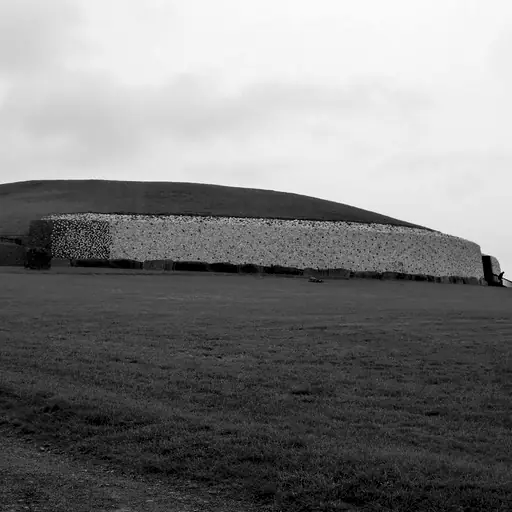
There is a 2,500-year-old technology for remembering things. It does not require an app, a notebook, or a stranger telling you to subscribe for $9.99 a month. It requires a building you have walked through. Inside that building, on the back of every door and on top of every piece of furniture, you have hung the things you want to remember, and they are yours forever.
This is not a metaphor. This is the technique.
A poet, a banquet, and the roof that fell
The story is told by Cicero in De Oratore, written in 55 BCE. It is already, when he tells it, an old story.
A Greek poet named Simonides of Ceos has been hired to recite a victory ode at a banquet in Thessaly. He delivers his ode, collects his fee, and is called outside by two young men who, the messenger says, would like a word. The young men are not there. While Simonides stands in the doorway looking for them, the roof of the banquet hall collapses. Everyone inside is killed, and the bodies are crushed beyond recognition.
The grieving families come to the wreckage. They cannot tell which body belongs to which house. They turn to Simonides (the only living witness to the seating arrangement) and ask him to identify the dead. And Simonides discovers something strange: he can. He closes his eyes and walks the table in his mind. He sees, in the order they sat, every guest. He points to the rubble at each location and says: this one is yours. That one is hers. The one over there belongs to the house of the host.
This is the legend, and it may not be true. Cicero acknowledges, with a faint smile, that the story might have been polished by later rhetoricians who wanted a creation myth for their craft. What matters is what happens next: Simonides realises that the organisational device of the room itself (the layout of the tables, the position of the couches, the doorway he had stood in) is what carried the memory. The faces were variables. The room was the index.
"He inferred that persons desiring to train this faculty must
select localities, and form mental images of the things they wish
to remember, and store those images in the localities, so that the
order of the localities will preserve the order of the things."
- Cicero, De Oratore, II.lxxxvi
That last clause (the order of the localities will preserve the order of the things) is the entire technique. Two and a half millennia of mnemonics have been variations on it.
What the medieval rhetoricians did with it
For about a thousand years, the Method of Loci was the technology that you used if you needed to remember a long thing. Not the technology you might use; the technology you did use. Cicero, Quintilian, Aquinas, Ramon Llull, Pietro da Ravenna, Giordano Bruno: they all wrote about it, often at obsessive length, because they needed it. Print was either expensive or didn't exist; speeches went on for hours; sermons had to be delivered without notes; theological disputations could last days. If you wanted to be a public intellectual in the year 1300, you had to have somewhere to put things in your head.
The medieval treatments tend toward the elaborate. Bruno's De Umbris Idearum (1582) describes a memory-system based on celestial mansions that can, in principle, hold the entire structure of human knowledge. Llull's Ars Magna combines loci with rotating wheels of category to generate every possible argument. The Renaissance memory theatres of Giulio Camillo were physical buildings, with marked positions, that were supposed to be loadable directly into the user's mind by walking around inside them.
This is where the technique acquires its reputation as a parlour trick (something that magicians use to memorise the order of a deck, or that grand-masters use to recite seventy digits of pi). The parlour-trick framing is unfortunate, because it obscures the more important thing about the method: it is the only memory technique we know of that scales. Lists, flashcards, mnemonics that aren't spatial, they all run out of room. Loci doesn't. There is always another corner of the building. There is always another building.
How it actually works
Strip away the medieval wallpaper and the technique is three steps:
- Choose a place you know cold. Not a place you've been to once.
A place you have lived in, walked through hundreds of times, and could draw the floor plan of from memory. Your childhood home. Your first apartment. The route from your front door to your coffee shop, every turn.
- Pick a fixed walking order through it. Front gate, mailbox,
driveway, garage door, foyer, coat hook, kitchen counter, fridge, stove. Whatever it is, commit to it. The order is the index. You will refer to it the way you refer to a book's table of contents.
- At each location ("locus"), place a vivid image of the thing
you want to remember. Not a polite image. Not a tasteful one. A weird one. A funny one. A grotesque one. Memory privileges what makes you flinch.
That's it. To recall, you walk the route. The images are at the loci. The order of the loci preserves the order of the things.
A worked example. Suppose you need to remember the first six elements of the periodic table (hydrogen, helium, lithium, beryllium, boron, carbon) in order, for some reason. You walk the route from your front door to your kitchen.
- Front door: a cartoon hydrogen atom (a comically tiny ball
with a single electron orbiting it like a fly) is hammering on the door, demanding to be let in.
- Coat hook: a helium balloon, but it's eating the coats. The
balloon has teeth. This is unsettling and you will remember it.
- Hallway mirror: someone has scratched the word LITHIUM into
it with a key. Below the word is a tiny battery, also scratched in. Lithium powers your batteries; the mirror reminds you who.
- Doorway to the kitchen: a beryl crystal (look up what beryl
looks like; pale green, hexagonal) is wedged into the door frame, forcing the door open. Beryl-lium.
- Kitchen counter, where the toaster is: it is full of boron, a
brown-black metalloid powder. You have ruined your toaster.
- Stove: it is, of course, on fire. Charcoal everywhere. Carbon.
Now walk the route in your head. Front door - hydrogen. Coat hook - helium. Mirror - lithium. Doorway - beryllium. Counter - boron. Stove - carbon. The route is the order. The images are the data.
This is what every championship memorist alive today is doing, mostly. The geometry might be more elaborate (some use phantasmagoric palaces with twenty rooms; some use ten linked buildings in sequence) and the encoding of the data into images might be more sophisticated (PAO for cards, Major for digits, phonetic alphabets for arbitrary syllables). But the substrate - spatial loci, walked in order, with images placed deliberately on them - is unchanged from Simonides.
Building your first palace
Pick a building you know. Not the one you live in now (you change the layout too often). Something fixed in time: the house you grew up in, your high school, the apartment of a college roommate. Anything where the geometry has stopped moving.
Walk through it once with intent. Don't try to memorise anything yet. Just walk it the way you would give a stranger a tour. This is the front door. This is the coat closet to the right. The kitchen is through the second door on the left, past the bathroom. Notice which features are sticky (the things that, even after years away, you remember exactly). Those become your loci.
A reasonable first palace has 10 to 20 loci. Fewer, and you'll saturate quickly. More, and you'll forget loci before you forget the items. Number them. Memorise the route. Test yourself: can you recall the loci in order, with your eyes closed, in under thirty seconds? If not, walk it again. The palace has to be behind the data, not on top of it.
If you don't have a building you know that well, borrow one. The memory theatres of the Renaissance were, in a sense, an early acknowledgement that not everyone has a personal palace handy. We ship six "stock palaces" on Major Dictionary for exactly this reason: Tuscan villa, a Brooklyn brownstone, a midcentury library, a forest walk, a cathedral, and a research lab. Pick the one that feels least like a stage set and most like a room you could imagine being in.
The canonical Memory Palaces ships with Major Dictionary as a starter system you can edit, override, and drill against. One click to adopt; the system joins your dictionary and the practice surfaces light up.
Each stock palace is six loci, arranged in a fixed walking order, illustrated with a single ink drawing per locus so the geometry locks in fast. They are not fancier than the technique requires. The point is the order, not the rendering.
The five things people get wrong
After two thousand years of writing about loci, the failure modes are well-documented. Five recurring ones:
1. Choosing a fictional palace
It is tempting to imagine a vast and cinematic palace (Hogwarts, the Tower of Babel, a spaceship). Resist the temptation. The palace must be a place you have physically been. The geometry needs to be built into your motor memory. A fictional palace works for an hour and then dissolves, because there is no off-screen reality holding it together. A real palace has been there for years and will continue to be there whether you visit it or not.
2. Placing tasteful images
Memory does not privilege tasteful images. The image you place at a locus has to be strange enough that you would tell someone about it. If you are encoding helium and your image is "a helium balloon, floating," that is too tasteful. The balloon needs to be eating something. It needs to be on fire. It needs to be saying something rude in a French accent. The rule is: the image should be slightly embarrassing to describe out loud. That is the dose.
3. Walking the wrong direction
Your route through the palace is one-directional. You walk it in the same order every time. If you sometimes go "front door → coat hook → kitchen" and sometimes "front door → kitchen → coat hook," you are not using one palace; you are using two, badly. Pick a direction and commit. (Most people walk left-to-right, but the direction matters less than the consistency.)
4. Reusing loci before they're empty
If you put helium on the coat hook for one task, do not put a Latin declension there an hour later. The two images will smear into each other and you will recall a Latin verb for "to balloon." The solution is either (a) to wait long enough for the first image to fade (usually a day), or (b) to keep separate palaces for separate domains. Most serious memorists use a different palace for each type of content. One for languages, one for digits, one for playing-card decks, one for whatever you happen to be reading.
5. Not testing the recall
The technique fails silently if you don't test it. The act of placing an image feels like you've memorised it; the act of walking the route to recover it is where the work is. Within an hour of placing the data, walk the route once. The next day, walk it again. The day after that, again. The route locks faster the more you walk it.
Variations the championship circuit uses
The simple version above is enough for almost everyone. The championship circuit pushes it in three ways.
Linked palaces. A single palace is 10–20 loci. Linked palaces chain twenty buildings together in a fixed order. World-record deck memorisers tend to keep five to ten linked palaces, walking through one and exiting into the next. This lets them encode a deck of cards (52 PAOs, 52 loci) inside one palace and have nineteen more palaces ready for the next deck without contamination.
Multi-image loci. Each locus holds a triplet (a Person doing an Action with an Object) instead of a single image. PAO encoding lets you compress three cards into one locus and walk through a deck of 52 in only 17 stops. We unpack PAO in its own article. The PAO method is the canonical treatment.
Encoded substrates. Instead of the headword being the image directly, the headword is encoded into a phonetic-alphabet image (Major System, Dominic, Ben System). The locus then holds the encoded image, not the raw datum. This is what lets memorists encode 200-digit numbers in two minutes: each pair of digits becomes a peg word (via Major), each peg word goes onto a locus, and 100 loci hold 200 digits in a single walk. [[link:/technique/major-system Major System] explains the encoding.
These are not new techniques. They are loci with extra machinery on top.
Why this works (a small note on the science)
There is real cognitive-science work on the Method of Loci, mostly since the 1970s. The summary: it works because human spatial memory and human episodic memory are very large and very durable compared to the working-memory buffer where things-to-remember normally compete for space. By converting an arbitrary list into a spatial walk, you offload the sequencing problem onto a substrate (your motor memory of a building) that is essentially free.
You are not making your memory better. You are taking a job your memory is bad at (remember this list of fifteen things in order) and transforming it into a job your memory is good at (remember a walk through your grandmother's house). The method is a translation, not a magic trick.
This is why the technique has lasted. It does not depend on anyone being unusually clever. It depends on the architecture of human memory, which is, on a long enough timeline, more reliable than fashion.
Where to start
You have an apartment or a house or a route to work that you know cold. That is your first palace. Pick six points along it. Walk the route once with intent. Try to memorise a grocery list of six things at those six points, with images that would slightly embarrass you to describe.
Then walk the route an hour later, and the next morning, and the day after that. The grocery list will still be there. So will the palace. You have just learned a 2,500-year-old technique that the internet cannot delete.
If you want a starter palace already laid out, six of them ship with Major Dictionary, illustrated, annotated, and free to adopt. Each covers a different geometry: a familiar living room, an apartment hallway, a museum corridor, a small Tuscan villa, a campus quad, a subway platform. Pick whichever room your inner eye already knows the best, then walk it without thinking. The architecture is doing the heavy lifting; you are renting the loci.
The canonical Memory Palaces ships with Major Dictionary as a starter system you can edit, override, and drill against. One click to adopt; the system joins your dictionary and the practice surfaces light up.
See also: The Major System for encoding numbers into peg words; Person · Action · Object for three-image loci.