Memorising the Periodic Table
One fixed peg per atomic number, so 47 is always a rock and the rock is always silver. Worked tables for elements 1 to 20 and 100 to 118, the Latin symbols, and a three-week plan.
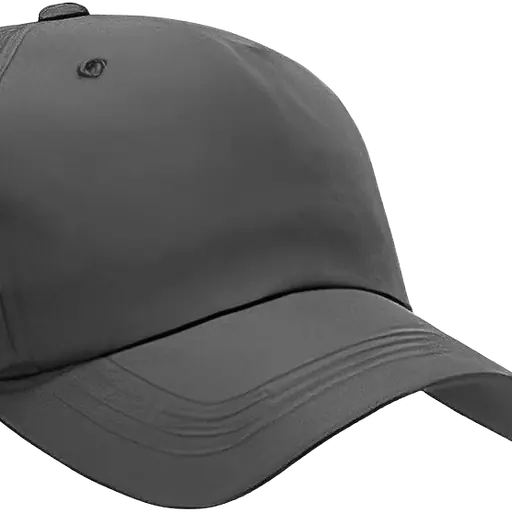
One Major System peg per atomic number. Forty-seven is r-k, a rock, so silver is a rock split open on a seam of silver; 79 is k-p, a cap, so gold is a cap of solid gold; 1 is tea, so hydrogen is a cup of tea that floats off its saucer. After that the number is the element and the element is the number, in both directions, and the symbol hangs off the same scene.
Testable before you finish the page: in about fifteen minutes you will know the first twenty elements in order, and answer "what is element 17?" without counting up from hydrogen and "what number is potassium?" without counting at all. The rest of the table is the same move on the pegs this dictionary pins for 00 to 99.
Do you actually need to?
Probably not all of it. Many school exams print the periodic table in the paper (AQA's GCSE chemistry papers come with it as an insert), so check a past paper for your board first.
Niki Kaiser, writing for the Royal Society of Chemistry's Education in Chemistry in 2019, put the case against rote learning flatly: "learning elements by rote has limited utility", and school time is better spent on how and why the table is arranged. Half of that is right: reciting 118 names is a party trick. What it misses is the fluency a number-pegged table gives, knowing without looking that 17 is chlorine, 35 is bromine and 53 is iodine, and noticing for yourself that they sit in a column. You do not need the table to pass chemistry; if you want the fluency, it is a smaller job than it looks.
Why the songs and acrostics stall
The two things everyone tries first are a song and a sentence, and both have the same defect: they only run forwards.
Tom Lehrer wrote "The Elements" in 1959 to the tune of the Major-General's Song: a marvel, and useless as a lookup table, since it covers the elements known then, up to 102, in an order chosen for metre and rhyme. AsapSCIENCE's Periodic Table Song, released in 2013 to Offenbach's Can-Can, fixed the order: its 31 October 2015 version runs from hydrogen to 118 with the last four under placeholder names, ununtrium, ununpentium, ununseptium and ununoctium; IUPAC verified those discoveries on 30 December 2015, and the 2018 update sings nihonium, moscovium, tennessine and oganesson. But ask either song "what is element 47?" and the only answer is to start at hydrogen and count.
Acrostics have that problem and one more. A common set, from Wikipedia's list of chemistry mnemonics:
| Covers | Sentence |
|---|---|
| Periods 1 and 2 (H to Ne) | Happy Henry Likes Beans Brownies and Chocolate Nuts Over Friday's News |
| Period 3 (Na to Ar) | Naughty Margaret Always Sighs, "Please Stop Clowning Around" |
| Alkali metals (group 1) | Little Naughty Kids Rob Crispy Fries |
| Alkaline earths (group 2) | Beer Mugs Can Serve Bar Rats |
| Halogens (group 17) | Funny Clowns Broil Innocent Ants |
| Noble gases (group 18) | He Never Arrived; Karen eXited with Ron |
They give you initials, not names, and initials are ambiguous exactly where it matters: N could be nitrogen, neon, nickel, niobium or neodymium, and "Nuts" against "News" carries that distinction on a vowel. They collapse after about twenty elements, which is why the set runs to one sentence per group, and none says which number anything is: "Funny Clowns Broil Innocent Ants" cannot tell you that bromine is 35. The guide to mnemonic devices covers when an acrostic is the right tool; a numbered list of 118 is not that case. Play the song as a warm-up for the first two rows, then build the thing that answers questions.
One peg per atomic number
An element is four facts: a name (silver), an atomic number (47), a symbol (Ag) and a position. The method nails name to number in both directions for all 118 and hangs the symbol on the same picture. Periods come free, because they are number ranges (1 to 2, 3 to 10, 11 to 18, 19 to 36, 37 to 54, 55 to 86, 87 to 118); groups are a smaller second job, covered near the end.
The Major System turns a number into a word by giving each digit a consonant sound: 0 is s or z, 1 is t or d, 2 is n, 3 is m, 4 is r, 5 is l, 6 is sh, ch or j, 7 is k or hard g, 8 is f or v, 9 is p or b; vowels are free. So 47 is r-k, a rock; 79 is k-p, a cap; 12 is t-n, a tin. A peg is the fixed word you always use for a number, and this dictionary pins one for every number from 00 to 99 on the peg chart.
The peg system guide explains why a fixed word per position beats a story chain for anything you need out of order; its worked example stops at ten rhyme pegs, where helium is a shoe, which is why Major pegs take over here and helium becomes Noah.
That guide also warns that pegs are the wrong tool for anything you want to keep for months. That warning is about reusing one peg list for several lists, where the newer tenant evicts the older; a list that owns its pegs for good, as the elements do here, is the exception. The catch is that these pegs already carry pi and the presidents here (26, notch, is Theodore Roosevelt there and iron here), so if you use two of those guides, give the elements a second address: the column routes near the end, the fix the presidents guide prescribes.
The method is one sentence long: take the peg for the atomic number and build a picture in which the element does something to it. Hydrogen is 1, 1 is tea, so hydrogen is a cup of tea so light it floats off the saucer. You do not need all hundred pegs to start, and the ten-minute tutorial teaches the sound rules once.
The canonical Major System ships with Major Dictionary as a starter system you can edit, override, and drill against. One click to adopt; the system joins your dictionary and the practice surfaces light up.
Three rules make the pictures hold. The element is the actor, the peg is the prop: the tea floats because it is hydrogen. Use a property you half-know (hydrogen is light, magnesium burns white, chlorine stings in a pool), which does the joining and is chemistry you need anyway. And say the picture in five words: "tea floats off the saucer". A picture you have not put into words is a picture you have not made.
The first twenty elements, pegged
Build each picture for three or four seconds before moving on; do not read the table like a list. Every peg links to its entry, with the hook and story that make a borrowed peg usable.
| No. | Element | Symbol | Peg | Picture |
|---|---|---|---|---|
| 1 | hydrogen | H | tea | a cup of tea so light it floats off the saucer |
| 2 | helium | He | Noah | Noah's ark hoisted by helium balloons, Noah squeaking orders |
| 3 | lithium | Li | Ma | Ma prising the lithium battery out of your phone |
| 4 | beryllium | Be | ray | a ray of light through an emerald (a beryl), scattering sparks |
| 5 | boron | B | law | a judge's gavel that is a box of borax, puffing powder |
| 6 | carbon | C | shoe | a shoe with a charcoal sole and a diamond buckle |
| 7 | nitrogen | N | key | a key dipped in liquid nitrogen that shatters when turned |
| 8 | oxygen | O | ivy | ivy on a wall breathing out oxygen bubbles you gulp |
| 9 | fluorine | F | pie | a pie filled with fluoride toothpaste |
| 10 | neon | Ne | toes | ten toes glowing neon red like a shop sign |
| 11 | sodium | Na | tot | a toddler emptying the salt cellar, shouting "Nah!" |
| 12 | magnesium | Mg | tin | a tin can with magnesium ribbon burning blinding white inside |
| 13 | aluminium | Al | tomb | a tomb wrapped entirely in kitchen foil |
| 14 | silicon | Si | tire | a tire stuffed with silicon chips, sand leaking from the tread |
| 15 | phosphorus | P | towel | a towel that glows in the dark, then flares like a match |
| 16 | sulfur | S | dish | a dish of yellow powder smelling of rotten eggs |
| 17 | chlorine | Cl | tack | a tack on the pool floor; chlorine stings as you dive for it |
| 18 | argon | Ar | dove | a dove sealed inside a light bulb full of argon |
| 19 | potassium | K | tape | a banana taped to a kettle (the kettle is the K) |
| 20 | calcium | Ca | nose | a nose of chalk that dusts white when scratched |
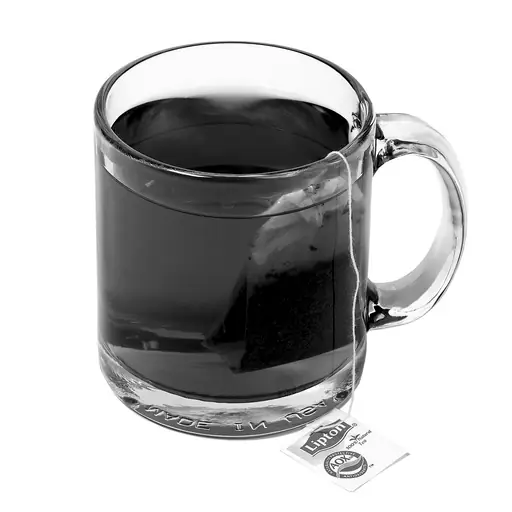
Now cover the table and go through 1 to 20 out of order: 17, 4, 11, 20, 9. Decode the number (17 is t-k, tack), let the tack pull up the scene, say the element. Then the other way: silicon, what was it doing? Filling a tire with chips, and tire is t-r, 14. That second direction is the one every song and sentence fails.
The Latin symbols and the metals everyone asks about
Most symbols are the first letter or two of the name. Jöns Jakob Berzelius introduced the modern letter symbols in 1814, and eleven look wrong in English because the symbol comes from an older name: Latin for ten of them, German (Wolfram) for tungsten. Two are already pegged above: sodium (11, natrium, the tot shouting "Nah!") and potassium (19, kalium, the banana taped to a kettle). A third, antimony (51, stibium, a lad called Stubby with a stub of black crayon), is built here. The other eight are Fe, Cu, Ag, Sn, W, Au, Hg and Pb, the famous metals and the block to learn second; the table below builds them, and adds four more that turn up in every quiz.
The symbol goes into the scene as a sound-alike object. Do not memorise "Ag means silver" as a fact; put an Argentine flag on the rock, and Ag, silver and 47 are one picture, any one of which brings back the other two.
| No. | Element | Symbol | From | Peg | Picture |
|---|---|---|---|---|---|
| 26 | iron | Fe | ferrum | notch | a notch cut into a rusty ferry's hull, rust bleeding from the cut |
| 29 | copper | Cu | cuprum | knob | a copper doorknob that is a cup you turn, green with verdigris |
| 30 | zinc | Zn | zinc | mouse | a mouse dipped in zinc, galvanised stiff and shiny |
| 47 | silver | Ag | argentum | rock | a rock split open on a seam of silver, an Argentine flag planted in it |
| 50 | tin | Sn | stannum | lace | a tin soldier standing to attention in a lace collar |
| 74 | tungsten | W | Wolfram (German) | car | a car with white-hot filament headlamps, a wolf driving |
| 78 | platinum | Pt | platinum | cave | a cave with mirror-bright platinum walls |
| 79 | gold | Au | aurum | cap | a cap of solid gold so heavy it bends your neck, and it gives you an aura |
| 80 | mercury | Hg | hydrargyrum | face | your face in a rippling pool of "water-silver" that glugs |
| 82 | lead | Pb | plumbum | fan | a plumber bolting a lead fan, too heavy to turn, to a lead pipe |
| 92 | uranium | U | uranium | pen | a pen that ticks like a Geiger counter as you write |
| 94 | plutonium | Pu | plutonium | pier | Pluto, dog or dwarf planet, at the end of a pier |
The forum thread closest to this method uses "cab" for 79; the site peg is cap. Either works; switching between them does not.
The tin trap
The peg for 12 is tin; element 12 is magnesium; the metal tin is element 50, peg lace. Leave this and "tin" will one day answer "12" when you meant "50". Make the collision work: in the magnesium picture the tin is a burning container; in the picture for the element tin there is no can, only a soldier in lace. "Tin can, white flare" is 12, "tin soldier, lace" is 50, and a peg word is never an element.
Elements 100 to 118
Past 99 you need three-digit pegs. The site's set builds them from the two-digit ones: 101 is toes tea (10, then 1), 113 is tot Ma (11, then 3), and 100 has a word of its own, thesis. A two-word peg is still one picture: a cup of tea balanced on your bare toes.
| No. | Element | Symbol | Peg | Named after |
|---|---|---|---|---|
| 100 | fermium | Fm | thesis | Enrico Fermi |
| 101 | mendelevium | Md | toes tea | Dmitri Mendeleev |
| 102 | nobelium | No | toes Noah | Alfred Nobel |
| 103 | lawrencium | Lr | toes Ma | Ernest Lawrence |
| 104 | rutherfordium | Rf | toes ray | Ernest Rutherford |
| 105 | dubnium | Db | toes law | Dubna, Russia |
| 106 | seaborgium | Sg | toes shoe | Glenn Seaborg |
| 107 | bohrium | Bh | toes key | Niels Bohr |
| 108 | hassium | Hs | toes ivy | Hesse (Latin Hassia) |
| 109 | meitnerium | Mt | toes pie | Lise Meitner |
| 110 | darmstadtium | Ds | tot sea | Darmstadt, Germany |
| 111 | roentgenium | Rg | tot tea | Wilhelm Röntgen |
| 112 | copernicium | Cn | tot Noah | Nicolaus Copernicus |
| 113 | nihonium | Nh | tot Ma | Nihon (Japan) |
| 114 | flerovium | Fl | tot ray | Flerov Laboratory (Georgy Flyorov) |
| 115 | moscovium | Mc | tot law | Moscow |
| 116 | livermorium | Lv | tot shoe | Livermore, California |
| 117 | tennessine | Ts | tot key | Tennessee |
| 118 | oganesson | Og | tot ivy | Yuri Oganessian |
IUPAC approved the last four names on 28 November 2016, completing the seventh row. All nineteen are named for people and places, so the pictures write themselves: Mendeleev's beard trailing in the tea on your toes (101), a toddler and its Ma waving a Japanese flag (113). The site peg for 110 is tot sea, not tot sauce; use the one on the chart.
Retrieving in every direction
The unsolved problem in the Art of Memory forum thread on this subject is direction: number to element is easy, element or symbol back to number is where people get stuck. Three directions, one picture, one rule each.
Number to element. Decode the digits into the peg (47 is r-k, rock), let the peg call up the scene, read off the element.
Element to number. This works only if the element is the subject of the scene. Ask "silver": if silver merely sits in a scene you get nothing; if the scene is "a silver seam splitting a rock", the rock arrives, r-k, 47. When this direction fails, rebuild the picture with the element doing the thing.
Symbol to element and number. The symbol is a third object in the same scene, put there on purpose. For the free ones (Si, Ca, Ne) see the letters on the prop: "Ca" chalked on the chalk nose. For the non-English eleven use the sound-alike, the keyword method applied to two letters: "Ag" calls the flag, the flag is on the rock, the rock is silver and 47.
Test all three directions on every element; a card that only ever asks "what is 47?" builds one path, and the exam asks along the other two.
Drill it on this site
Reading the tables is not learning them. Karpicke and Roediger (2008) had students learn foreign vocabulary, then either keep studying items they had already learned or keep testing themselves on them. Repeated studying made no difference on a delayed test; repeated testing produced a large improvement; and the students' own predictions were unrelated to how they did, which is why people who re-read a table feel prepared and are not.
Build the drill as a two-column file: the front is the cue, the back is everything you want back.
| front | back |
|---|---|
| 1 | hydrogen, H, tea floats off the saucer |
| 17 | chlorine, Cl, tack on the pool floor |
| 47 | silver, Ag, rock split on a silver seam |
Save it as periodic-numbers.csv with a header row of front,back, and make a second, periodic-names.csv, with the columns swapped (front silver, back 47, Ag, rock) so the reverse direction gets its own deck. Upload each at the import page, which takes .csv, .tsv and Anki .apkg files and names the deck after the file. One wrinkle: because every front in the numbers file is a whole number, the page detects a pegset and ticks a box offering to link each row to its own peg entry; untick it, or the deck comes through as peg entries rather than your cards.
Then open the custom drill, pick the deck, choose five, ten or twenty cards and a memorise window between fifteen seconds and three minutes. Each front is shown alone until you reveal the back and grade yourself miss, hard or easy; at the end you get your accuracy and every card you dropped.
Spacing matters as much as testing: Cepeda and colleagues' 2006 review pooled 839 assessments from 317 experiments and found sessions spread over days beat the same minutes in one sitting, the best gap growing with how long you need the material. The spaced repetition guide gives the schedule; palace practice runs the column routes below in SM-2 order.
A three-week plan
Three weeks of two ten-minute sittings a day. The numbers are a suggestion; the structure (small blocks, tested both ways, reviewed on a widening gap) is not.
Week one: 1 to 20. Day one, build 1 to 10 and test both ways that evening. Day two, 11 to 20 the same way, retesting 1 to 10 first. Day three, the Na and K symbols and the tin trap. Days four and five, the custom drill on the numbers deck and then the names deck. Day six, nothing new: recall the lot cold and rebuild what dropped. Day seven, the first five metals.
Week two: 21 to 56, by row. Period four runs 19 to 36 and period five 37 to 54, with 55 and 56 opening period six: thirty-six elements, six a day for six days, mornings on new ones and evenings on a test of everything so far. Day seven is a review, and the moment to shuffle the decks so number, name and symbol are all being asked.
Week three: 57 to 118. The lanthanides (57 to 71) on days one and two, 72 to 86 on day three, 87 to 103 on days four and five, and 104 to 118 on day six from the three-digit table. Day seven: the whole table, cold, from a shuffled deck of 118. After that, one review a week for a month, then one a month. If a block goes soft it will be the lanthanides; give them a deck of their own.
After the order: groups and masses
Knowing the numbers gives you the rows, and it makes the columns visible, because a column is a number pattern: the noble gases are 2, 10, 18, 36, 54, 86 (Noah, toes, dove, match, lure, fish), the alkali metals 3, 11, 19, 37, 55, 87 (Ma, tot, tape, mug, lily, fog), the halogens 9, 17, 35, 53, 85 (pie, tack, mule, lamb, file), with 117 and 118 from the bottom row closing those last two columns. This is where Kaiser's point comes true: the arrangement stops being a poster and becomes something you can see.
To make a column permanent, give it a place. A sentence will do for a short column, and the Major System guide offers one for the noble gases up to radon, but a route keeps the numbers attached and a sentence cannot. Take six spots along your street and put the noble gases on them in order as their pegged pictures: Noah's balloon-lifted ark at the gate, glowing toes on the doorstep. That is the Method of Loci with one route per column; four routes (alkali metals, alkaline earths, halogens, noble gases) cover what a school course asks, and the stock palaces here will do instead of building your own. Then test on a blank table: fill in the symbols from the numbers alone and rebuild whichever column you got wrong.
Atomic masses are a step most people should skip, but the pegs do that too: round to a whole number and add it as a second prop, so a tape (19) and a key (7) fall out of the gold cap for 197. For most chemistry courses the first twenty, the famous metals and the four main groups are more than the exam rewards, and the study techniques guide covers deciding what in a course deserves this kind of time.
How long it takes
The first twenty take one evening. For all 118, people who have written it up on the Art of Memory forum report anything from five minutes a day for a month and a half (roughly four hours all told) to about ten days; the plan above sits between them.
Start with the first twenty tonight, then build the numbers deck and run it at the custom drill tomorrow, before you look at the table again. Twenty in sixty seconds, both directions, is the test that the method has taken. The other technique guides take it on to the presidents, cards and speeches.