Memory Techniques for Studying and Exams
Retrieval practice and spacing first, mnemonics for the facts that refuse to stick, two dated revision plans, a protocol for the night before, and what exercise, place and sleep add.
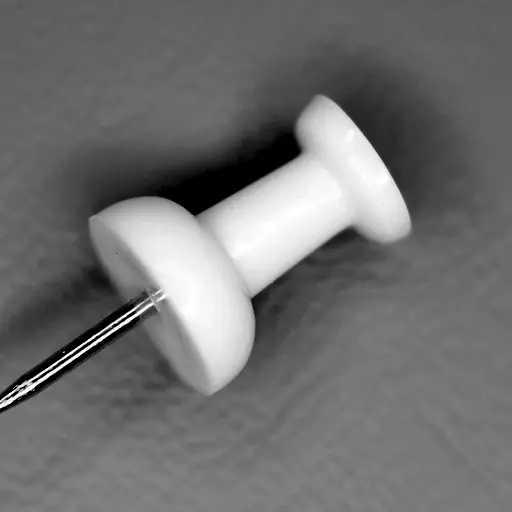
Here is the promise, and you can test it tonight. The memory techniques that work for studying are two, retrieval practice (which students usually call active recall) and spacing, and both fit in one page of notes. Take the page you are most worried about. Read it once, close it, and write everything you can remember on a blank sheet. Open the notes and mark what you missed. Tomorrow morning, before you look at the page again, do the blank sheet a second time. The blank sheet is retrieval practice; the overnight gap is spacing. That is fifteen minutes. At equal study time, recall won every delayed test Roediger and Karpicke ran, below; trading an hour of rereading for it is our arithmetic, not their result. By the end of this article you will know why, how far apart to repeat it, what to do with the facts that refuse to stick (that is where mnemonics come in), and what to do if the exam is tomorrow.
What actually works, ranked
In 2013 a review led by John Dunlosky rated ten common study techniques by how well they worked across different learners, kinds of material and kinds of test.
| Technique | Rating | What it means for you |
|---|---|---|
| Practice testing (self-testing, flashcards, past papers) | High | Pull it out of your head, not back in |
| Distributed practice (spacing sessions out) | High | Two hours a week apart beat two hours in a row |
| Elaborative interrogation ("why is this true?") | Moderate | For facts you half understand |
| Self-explanation (talking through each step) | Moderate | For problem-solving and derivations |
| Interleaved practice (mixing problem types) | Moderate | Feels worse, tests better |
| Summarising | Low | Helps only if you are already good at it |
| Highlighting and underlining | Low | No consistent measured benefit |
| Keyword mnemonic | Low (for general study) | Powerful on the right material, useless on the rest, and fades over long delays |
| Imagery for text | Low | Concrete passages only |
| Rereading | Low | The default; the review says use practice testing in its place |
Only practice testing and distributed practice earned the high rating, because they helped learners of different ages and abilities across many kinds of material and test. Rereading is one of the five low ones, and the survey two sections down finds it is the strategy students use most.
Seven more names turn up in most lists of study methods, none of them in Dunlosky's ten. Each is one of the ten in a different coat, or in no coat at all, and the evidence says which.
Chunking. Grouping items into fewer, larger units. George Miller's 1956 paper put immediate memory at about seven items and named recoding, grouping, as the way past the limit: the span is counted in chunks, so make the chunks bigger. Every mnemonic below does that for you, and a Major peg does it hardest, turning a four-digit year into two words.
Saying it aloud. Words read aloud are later recognised more often than words read silently, the production effect, and in the first three of Colin MacLeod's eight recognition experiments the gain appeared only in mixed lists, where some items were spoken and the rest read silently. So speak the handful of terms you keep losing, not the chapter. Reciting with the page closed is the blank page, spoken; reading the page aloud is a reread with sound.
Teaching it, usually sold as the Feynman technique. In 2014 John Nestojko and colleagues told some readers they would teach a passage and told others to expect a test; nobody taught anyone, everyone was tested, and the group expecting to teach produced more complete and better organised recall. Explaining from memory in plain words is the closed-book rewrite out loud, retrieval plus self-explanation; explaining from your notes is a reread with an audience.
Writing by hand. The famous study is Pam Mueller and Daniel Oppenheimer's in 2014: laptop note-takers did worse on conceptual questions, and the culprit they identify is transcribing verbatim instead of rephrasing. A direct replication in 2019 by Kayla Morehead, Dunlosky and Rawson found the trends pointing the same way but no consistent difference between groups, and a 2024 meta-analysis of 24 studies puts taking and reviewing handwritten notes ahead by about a quarter of a standard deviation, while typing wins on sheer volume of notes. So the edge is real and small, and it comes from rephrasing: copying the page by hand is calligraphy, and recalling onto a keyboard is still recall.
Mind maps, whose academic cousin is concept mapping. In 2011 Karpicke and Janell Blunt pitted it against retrieval practice on a one-week test of facts and inferences: retrieval 0.67, mapping 0.45. In a second experiment, 90 of 120 students, three quarters, expected mapping to do as well or better. Drawn with the notes closed, a map is a blank page with arrows.
SQ3R. Survey, question, read, recite, review. The question step is the question bank below and the recite step is the blank page; the other three are reading with a plan.
Pomodoro. Twenty-five minutes of work, a five-minute break, a longer break every fourth round. It is the best known name on this list and the only one here that is not a memory technique at all: it is time-boxing, and none of Dunlosky's ten is about the clock. It buys attention, not retention, because twenty-five minutes of rereading is still rereading. Treat it as the container and let the rated methods fill it: one block is one blank page on one topic, then the marking, then the question bank for the gaps.
Why students keep choosing the methods that fail
When Jeffrey Karpicke and colleagues surveyed 177 undergraduates, 84 per cent listed rereading as a study strategy and 55 per cent called it their number one. Eleven per cent listed self-testing. A hundred and one of them were then asked to choose between restudying a chapter and testing themselves on it with no chance to restudy afterwards: 18 per cent picked testing, and more than half of those said they would do it for the feedback, not because retrieval itself teaches. The other 76 got a version where restudy was allowed after the test, and the share picking testing rose to 42 per cent, which is the same instinct scaled up: the test tells you what to reread. Testing was a thermometer, not a treatment.
In 2006 Henry Roediger and Karpicke gave 120 students two short reading passages. Every student did both conditions, rereading one and, for the other, closing it and writing down what they could recall; what differed between students was when the final test came. At five minutes the reread passage was ahead, 81 per cent to 75. At two days the recalled one was ahead, 68 to 54; at a week, 56 to 42. In a second experiment, students who read the passage once and recalled it three times scored 61 per cent after a week; students who read it four times scored 40. The re-readers forgot roughly half of what they first knew, the testers 14 per cent, and asked to predict their own results the re-readers were the more confident group. Your sense of how well a session went is the least reliable instrument you own.
Sort your notes first: understand, memorise, both
Before any technique, spend twenty minutes sorting. Mark each item in your notes U (you need to understand it and could rebuild it from the idea: why enzymes denature, how a price is set), M (arbitrary, must simply be known: dates, names, constants, vocabulary, the order of a process, the members of a group) or B (both: a formula you must know cold and also know when to use).
U material gets retrieval by explaining and problem-solving; M gets flashcards plus, for the stubborn cases, a mnemonic; B gets both. The sort is keyed to the material, not to the learner: the useful question is never whether you are a visual or a verbal type, only whether an item has to be understood or simply known. Skip the sort and you end up with a memory palace full of concepts that needed thinking about.
| Kind of material | Best tool | Where to learn it |
|---|---|---|
| A short ordered list (stages, steps) | Link method | the link method |
| A long ordered list, or many lists | Memory palace | the method of loci |
| An unordered set (members of a group) | Acronym or story, then flashcards | mnemonic devices |
| A date, number or constant | Major System pegs | the Major System |
| A formula with constants in it | Pegs for the constants (rhyme pegs stop at ten, so any constant past a single digit wants the Major System), retrieval for the shape | the peg system |
| Foreign vocabulary or technical terms | Keyword method plus a spaced deck | the keyword method |
| A definition, process or mechanism | Closed-book rewrite, then a link chain for the order | This article, next section |
| A concept or argument | Retrieval by explaining, elaborative interrogation | remembering what you read |
| An essay structure or speech | Link chain of point-images | memorising a speech |
The guide to the techniques is the hub for that right-hand column.
Retrieval practice: turn your notes into questions and a blank page
Three ways to practise retrieval on your own notes, for three stages.
The blank page, sometimes called blurting. Take a topic heading, close everything, and write every fact, term, diagram and connection you can produce for five to ten minutes, in any order. Open the notes and mark, in a different colour, what you missed or got wrong. The marked items are your revision list; the rest can wait a week.
The question bank. While taking or tidying notes, write a question in the margin for every fact worth having: not "photosynthesis" but "what are its two stages and where does each happen?". Cover the notes and answer them. Typed into two columns later, they are a deck.
The closed-book rewrite. For a process, proof or mechanism, put the notes away, write the whole thing from memory, and compare line by line. Slower, but it catches what fails on a structured question: a missed step, a forgotten condition, a sign error.
The rule in all three: recall first, check second. The moment you look, retrieval turns back into a reread, so turn each highlight in your notes into a margin question instead.
How many times? Katherine Rawson and John Dunlosky, across three experiments with 533 students, found the efficient schedule for material wanted months later: three correct recalls in the first session, then one correct recall at each of three widely spaced sessions. So: right three times on the day, then once at each gap in the next section's table. Retire cards you always get right; cards you keep missing need more spacing or, if the fact is arbitrary, a mnemonic.
Spacing: how far apart to review, by exam date
Spacing comes with numbers. A synthesis of 839 assessments from 317 experiments found spaced practice beats massed practice, with the ideal gap growing as the time to the test grows. A follow-up by Nicholas Cepeda and colleagues, with more than 1,350 participants and test delays up to a year, put figures on it: measured as a share of the time to the test, the best gap between a first and second session fell from about 20 to 40 per cent for a test one week away to about 5 to 10 per cent for a test a year away. Counted in days rather than shares, the recall optima they interpolated from the gaps they actually ran came out at roughly three, eight, twelve and twenty-seven days for tests one week, five weeks, ten weeks and a year out; the interpolated peak for the shortest delay, three days in seven, sits a little above the 20-to-40 band the abstract quotes. The gap grows while its share shrinks. Too short and the second session is a reread; too long and you relearn from scratch.
The next-day recall comes first in every row below, and the reason is the forgetting curve with its real numbers. What Ebbinghaus measured, and what Jaap Murre and Joeri Dros replicated in 2015, is savings, how much faster a list of nonsense syllables is relearned, not how many items are still there. His printed table gives 44 per cent saved after an hour, about a third after a day and a quarter after six days: steep, then flat. The "half gone in an hour" and "seventy per cent forgotten in a day" figures that circulate are those savings numbers flipped and then read as items you can no longer recall, which is not what savings measures. And his syllables were chosen to mean nothing, which your notes are not. The replication found the same shape at lower values, and savings that rose a little overnight, from 28 per cent at nine hours to 32 at one day; Murre and Dros write that sleep research would predict such a boost, while noting that for this kind of experiment the cause remains to be established. So the first spaced recall is the next morning, after the bump, and only then does the long gap open. As a schedule, with the Cepeda gap counted from the next-day recall rather than from the day you first learned it (the arithmetic is ours, not a table from the paper):
| Exam in | Next day | Then | Then | Final pass |
|---|---|---|---|---|
| 1 week | recall it | day 4 | skip | the day before |
| 1 month | recall it | about day 7 | about day 20 | 2 days before |
| 3 months | recall it | about 2 weeks | about 6 weeks | the final week |
The 1-3-7-14-30, 2-7-30, 2357 and 7-3-2-1 schedules are fixed rules of thumb in the same family; the spaced repetition guide sets all four beside O'Brien's Rule of Five and SM-2 and says which deadline each suits. SM-2 does the arithmetic per card from how well you recalled, and the custom drill on this site runs it on your imported deck.
Mnemonics for the stubborn facts: three worked examples
After a week of retrieval, most of your material sticks and a residue does not: dates, constants, terms that sound like nothing, the four stages that keep coming out in the wrong order. This is what mnemonics were invented for. Each example ends with the instruction to recall it, not admire it.
Start with the cheapest. An acronym or acrostic (HOMES, SOHCAHTOA) costs ten seconds and is a complete answer when you can already produce each item from its first letter. It fails the moment you cannot, because a letter alone points at nothing, and then you need one of the three below.
A term, by the keyword method. Apoptosis, programmed cell death, sounds like "a pop, toes". Picture a cell shaped like a foot, its toes popping off one at a time, neatly, on a timer. Popping toes on schedule is programmed death. Close your eyes and say what apoptosis is. The same move handles foreign vocabulary, drug names and anatomy. It fits only concrete, imageable material and fades unless retrieved, which is why every mnemonic you build goes onto a card.
A date, by Major System pegs. The French Revolution begins in 1789. In the Major System every two-digit number has a fixed word: 17 is a tack and 89 is a fob, a pocket-watch on its chain.
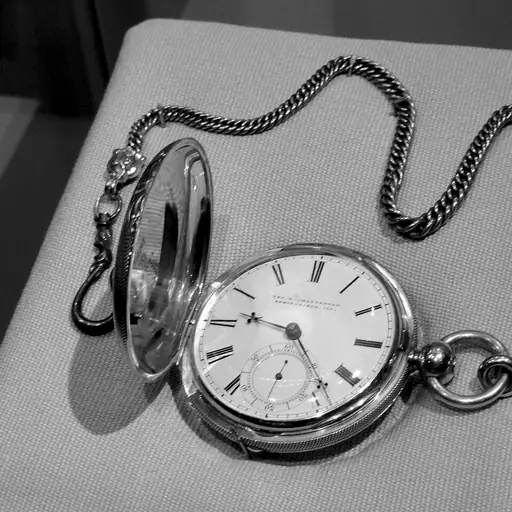
A brass tack pinned through a gold watch fob, nailing it to the gate of the Bastille. Tack, fob: 17, 89. Say the date. The century usually takes care of itself, so a two-digit peg is often enough; the chart of pegs 00 to 99 has all hundred, and a constant is the same move.
A short ordered process, by the link method. Mitosis: prophase, metaphase, anaphase, telophase. A professional boxer (pro) steps onto a metal plate (meta) that splits down the middle; each half is dragged off by an anchor (ana); at each end a telephone (telo) rings. One image pulls the next. Cover the list and walk the chain.
All three rest on the same skill, turning a word into a picture and joining it to its cue, which the link method guide teaches in full. A peg image you look at instead of producing is a decorated reread; a mnemonic is finished when you have recalled it on two different days.
A memory palace for a whole topic
A memory palace is a route through a place you know with one image at each stop. Its exam use is material with a natural order that must be recalled whole: a process, a period, a proof. It is not a general filing cabinet; where a chapter has no natural order (unrelated definitions, causes in any sequence) a palace adds nothing over a deck.
The stock palaces here include an Oxford library with fifteen loci, from the porter's lodge through Duke Humfrey's reading room to the courtyard grass. Take a biology chapter on digestion. At the porter's lodge, a porter chewing loudly: the mouth, salivary amylase starting on starch. On the stone staircase, a muscular banister squeezing a lump downward: the oesophagus, peristalsis. In Duke Humfrey's, a vat of acid dissolving a book: the stomach, hydrochloric acid and pepsin on protein. And so on, one organ per locus, out through the cloister exit and onto the courtyard grass.
Now walk it with your eyes closed, saying the fact at each stop, and walk it again tomorrow before you open the book. The palace holds order and completeness; the facts still need retrieval, and the walk is that retrieval. A route never walked is an evening wasted.
From notes to a deck: import, drill against the clock, review the palace
Everything above leaves a two-column list of prompts and answers, which earns its keep only when drilled under conditions harder than the exam. Save it as a .csv or .tsv file and import it; the importer takes .csv, .tsv and Anki .apkg files, and for a csv it asks which column is the front and which the back (an .apkg has fixed fields, so it skips the question). Then open the custom drill, pick the deck, choose five, ten or twenty cards, set a memorise timer between fifteen seconds and three minutes, and begin. You see the cards for that time, recall each, grade yourself, and get a results screen that lists every card in order with a tick or a cross against it. Cards whose SM-2 due date has passed come first, then the ones you have never seen or have edited since, then the rest in deck order, and each grade sets the card's next due date: the spacing table, done per card. Tomorrow, run it with a shorter timer; encoding under pressure is what the exam tests.
If you built a palace and assigned an entry to each room (it wants at least three filled before it will start), the palace review walks it as flip cards, most overdue locus first and never-reviewed loci counted as due now. You say what is at each stop, flip, and grade it, and the grade sets when that locus comes round again. It does not remind you, so put the walks on the table above.
Exercise, place, music, sleep and time of day
Sleep has the best-established mechanism behind it, the consolidation Rasch and Born describe in the cramming section below; the rest matter less than the method, and here is what can be said.
Exercise. A meta-analysis by Marc Roig and colleagues (29 studies of a single bout of aerobic exercise, 21 of programmes over weeks) found that a single bout had a moderate to large effect on long-term memory, and that weeks of regular exercise had no significant effect on it. The review proposes a mechanism rather than just an effect: acute exercise improves memory in a time-dependent fashion by priming the molecular processes involved in encoding and consolidating what was just learned. Twenty brisk minutes near a blank-page session is our reading of that; the review gives no duration and no before-or-after. Its bouts also sit around learning, not around testing, so the walk before the exam itself that revision guides like to prescribe is not the thing this evidence measured.
Place. Memory leans on the room it was learned in. Steven Smith and Edward Vela's meta-analysis found the effect reliable but smaller when learning and testing rely on cues other than the room, which retrieval practice does by design, and smaller again when you picture the room at test. If a fact sticks in the exam hall, picture the desk it was learned at.
Music. Two questions wear one word. As background, none of the studies cited here tests it, and quiet is the safe default for a recall session: lyrics are words, and so is what you are trying to produce. As the mnemonic itself, a rhyme or a song carrying the material, it is a device rather than a condition, and the guide to mnemonic devices says where it earns its place.
Time of day. Steffen Gais, Brian Lucas and Jan Born found that secondary-school students kept more vocabulary when sleep followed within a few hours of learning than when a day awake came first, independent of the time of day. A session a few hours before bed gets consolidated first, so give the evening to the material you least want to lose rather than to the easy material.
How to memorise for exams: four weeks out and seven days out
Both assume about an hour a day per subject. Sessions are named by what you do, because "revise chapter 3" turns into rereading it.
Four weeks out.
| Week | What the sessions are |
|---|---|
| 1 | Sort every topic U, M or B. Blank page on each once, and again the next day. Write the question bank as you go. Import the deck. |
| 2 | Blank page again on the week-1 topics (the day-7 gap). Mnemonics for the M residue, recalled the next day. Start the palace if a topic has order. Deck drill, twenty cards, sixty seconds. |
| 3 | Past papers, timed, with question types shuffled rather than worked chapter by chapter: that is interleaving. Closed-book rewrites of processes. Walk the palace. Week-1 topics again (about day 20). Deck drill at thirty seconds. |
| 4 | Final pass two days before the exam: blank page on everything once, recall every mnemonic. After that, retrieve only what you missed, build nothing new, sleep. |
Seven days out.
| Day | What you do |
|---|---|
| 7 | Sort. Blank page on the three biggest topics. Import a deck of the gaps. |
| 6 | Next-day recall of the day-7 topics. Blank page on the remaining topics. Mnemonics for the twenty most arbitrary facts. |
| 5 | Next-day recall of the day-6 topics and the twenty. Deck drill. |
| 4 | One past paper, timed. Closed-book rewrites of processes and proofs. |
| 3 | Day-7 and day-6 topics again (day 4 of the one-week row). |
| 2 | Second review of everything, blank page only. Deck drill, short timer. |
| 1 | Morning: recall the twenty. Afternoon: light review of gaps. Evening: nothing. Sleep. |
Neither plan has a session called "read the notes"; if your timetable has one, rename it "blank page on the notes".
How to memorise notes fast: one night left
The advice is do not cram; the reality is that most students will, so here is the night.
| Block | Minutes | What you do |
|---|---|---|
| Triage | 30 | List the twenty facts, definitions or steps most likely to be asked that you do not yet know cold. Not the course. Past papers find them faster than notes |
| Retrieval only | 90 | Blank page on each major topic, ten minutes each; mark the gaps, recall the gaps. No rereading chapters: rereading is the group that had forgotten half by the test |
| Mnemonics for the twenty | 45 | A keyword, peg or link image for each, then recall all twenty. Arbitrary facts are what fail under stress, and an image is easier to find under stress than a bare fact |
| Sleep | 360 or more | Consolidation, below |
| Morning | 20 | Recall the twenty from their images, one blank page on the topic that worries you most, then stop |
Consolidation is not a metaphor. Björn Rasch and Jan Born's review describes the waking brain as tuned for taking information in and the sleeping brain for stabilising it, with slow-wave sleep reactivating what was recently encoded. An all-nighter trades the consolidation of everything you learned today for a few more hours of encoding. We know of no study that has run three hours of retrieval plus six of sleep against nine hours of rereading and none; the trade follows from testing beating restudying at equal time, and the arithmetic is ours, not theirs.
The limits, and fifteen minutes to start tonight
Mnemonic skill takes time. In 2017 Martin Dresler and colleagues took fifty-one volunteers who had never used mnemonics and gave a third of them forty daily half-hour sessions of method-of-loci training over six weeks; that group went from about 26 words of 72 to about 62, far more than either an active or a passive control gained, and the gain still held at a memory retest four months later. The other half of that finding is the six weeks: start building palaces the week before an exam and you spend the week learning the technique instead of the subject. Links and pegs work in an evening; build the palace skill during term.
And mnemonics store; they do not understand. A peg gives you the date, not why the revolution happened, which is what the U column is for.
Tonight: the routine this article opened with, plus one image each for the two most arbitrary gaps. Do the blank page again before you open the notes; the second sheet will beat the first, and you will have measured it yourself. Type the marked gaps into two columns, import them, and put them through the custom drill tomorrow.
If you want the measurement before you commit, the free grocery challenge runs at your own pace: ten items recalled cold, the link method, ten items recalled again, with a before-and-after score and no account. Recall beats rereading, and you can check it.