Memorising a Deck of Cards
A picture for every card, a route to put them on, and a fourteen-day plan. The beginner's path to reciting a shuffled deck, with the mistakes that stall it.
Memorising the order of a shuffled deck of cards is the memory feat that sounds most impossible and is, in practice, the most learnable. It requires no talent, no unusual visual imagination, and no more than about ten hours of practice spread over two or three weeks. At the end of that time you will be able to look through a shuffled deck once, hand it to someone, and recite it back. The first time you do it you will not entirely believe it happened.
This is a step-by-step guide for someone starting from nothing. The PAO article on this site is the reference on the encoding system competitors use; this page is the order in which to learn things, how long each stage takes, and what goes wrong.
What you are going to build
Three things, and only three.
An image for every card. Fifty-two cards, fifty-two pictures, so that when you see the seven of clubs you do not think "seven of clubs" but see, say, Charlie Chaplin tipping his bowler hat. This is the part that takes the time, and it is done once.
A route with places on it. A path through somewhere you know well (your flat, your walk to work) with a fixed sequence of spots along it. This is a memory palace, and for a first deck you need fifty-two spots, later eighteen.
A way of putting one on the other. As you look through the deck, you place each card's image at the next spot on the route, making it do something to the spot. To recall, you walk the route and look at what is at each spot. That is the whole technique. Everything else is practice.
Step one: give every card a picture
There are two ways to do this, and beginners should take the second.
The first is to build a set from scratch: choose a person, an action and an object for every card, following the rules in the PAO article. This produces the strongest set, because every image is yours, and it takes a weekend of choosing that most beginners never finish.
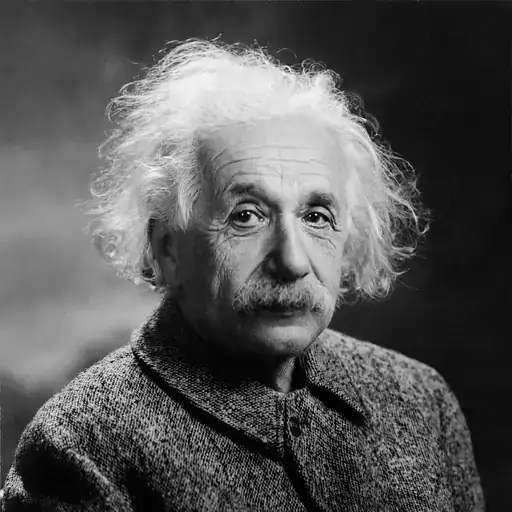
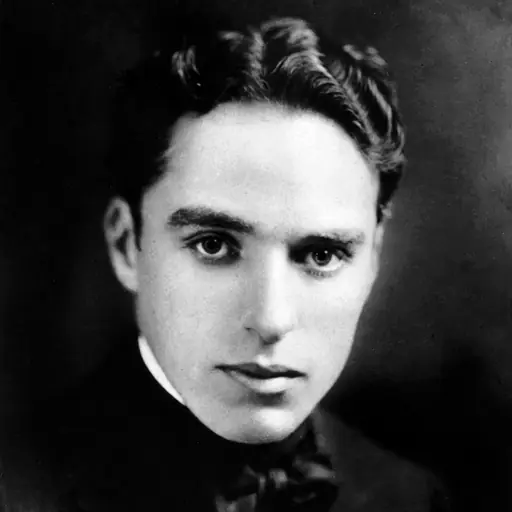
The second is to adopt a starter set and replace images as you go. This dictionary ships one: fifty-two people, each with a signature action and object, arranged so that the person's initial matches the rank (every ace is an A, every two is a B) and each suit has its own flavour. The ace of spades is Albert Einstein scribbling on a chalkboard; the two of hearts is Beyoncé twirling a fan; the three of diamonds is Charlie Chaplin tipping a bowler hat.

Start with the person only. The action and object matter later, when you compress; for a first deck you need one picture per card, and the person is it. If a person in the starter set means nothing to you (you have never seen the film, you cannot picture the singer), swap them immediately for someone with the same initial whom you can see. A picture you cannot see is not a picture.
Step two: learn the pictures until they are automatic
This is the stage that decides everything, and it is the one people rush. The goal is that a card produces its person in under a second without any conscious work, the way a word on a page produces its meaning. Until that is true, memorising a deck is a slog, because every card costs you a deliberate translation.
The drill is simple. Take a real deck and go through it, saying the person aloud for each card. Note the ones that made you pause. Go through again. Do this for ten minutes a day, and after three or four days most cards will be instant; the stubborn ten or so get extra attention with the deck's suit and rank shown together.
The deck journey on this site runs this stage for you: it teaches the four suits, then drills the person for each card with timing, so that the slow cards come round more often than the fast ones. The cards practice does the same as a standalone drill, and the cards you miss are flagged in your personal dictionary.
A test you should pass before moving on: someone shows you cards at random and you name the person for each within a second, for a whole deck, with no more than two hesitations.
Step three: build the route
You need fifty-two spots in a fixed order. This sounds like a lot and is not. A two-bedroom flat has fifty-two spots in it without trying: front door, doormat, coat hook, hall table, light switch, and so on, room by room, always moving in the same direction (clockwise round each room works). Write the list down the first time and walk it in your mind until you can run it forwards without the list.
Spots should be distinct from each other and roughly evenly spaced; a spot is a place an image can be, so a whole wall is too big and a single key on a keyboard is too small. If your home does not have enough, use two places (home and workplace) and join them, or use one of the stock palaces on this site, which give you mapped routes with the spots already numbered.
Do not skip the writing-down. The single commonest failure at this stage is a route with spots the memoriser has not actually fixed, which come out in a different order at recall.
Step four: your first deck
Shuffle. Set a timer, but do not look at it. Take the top card, see its person, and put that person at the first spot on your route, doing something to it: Einstein is scribbling equations on your front door with chalk. Next card, next spot. Make each image interact with its spot, keep it moving, and do not linger. When you reach the end, put the deck face down.
Now recall. Walk the route. At each spot, look at who is there and say the card. Write the sequence down, or lay out a second deck in the order you recall, and then compare with the first deck.
A first attempt typically takes ten to twenty minutes to memorise and produces somewhere between thirty-five and fifty correct cards. This is a good result. The errors will cluster in two types, and both are diagnostic: a card whose image you could not see clearly (go back to step two for that card), and a spot that gave you nothing (the spot was weak; replace it).
Do a deck a day. By the fifth or sixth attempt most people are getting all fifty-two, in under ten minutes, and the timer starts to be interesting.
Step five: compress with PAO
Fifty-two spots for fifty-two cards works, but it is slow, because every card is a separate act of placing. The competitive technique puts three cards at each spot, using the Person from the first card, the Action from the second and the Object from the third, so that a deck becomes seventeen images and a spare card.
With the starter set: the ace of spades, then the two of hearts, then the three of diamonds, becomes Albert Einstein twirling a bowler hat. The same three cards in the reverse order become Charlie Chaplin twirling a chalkboard. Each is one image, and each is unambiguous, because you know that the person is always the first card, the action the second, the object the third.
This is where the action and object you set aside in step one come in, and it means a second round of learning: every card must now produce its action and its object as instantly as it produces its person. The PAO article covers how to choose and drill them, and the deck journey's later stages drill the triples under time. Budget a week for this stage. When it is in, a full deck needs an eighteen-spot route and, at a relaxed pace, takes three or four minutes to memorise.
Reading the deck
A detail nobody mentions and everybody trips on: how you physically look at the cards decides your pace. Hold the deck face down in one hand and deal with the other, one card at a time, onto a face-up pile, so that you only ever see the current card. Fanning the deck or looking at two cards at once invites the eye to skip ahead, and a skipped card is the most common cause of a whole recall shifting by one place.
Read rank first, then suit, in that order every time, because the starter set is organised by rank (the initial) with the suit as a modifier, and a fixed reading order lets the person arrive faster. When you find yourself hesitating on a card, it is nearly always the suit, and the fix is the rank-across-suits drill from the mistakes section, not more time with the whole deck.
Deal at a steady pace rather than pausing on hard cards. A card that takes four seconds and a card that takes one should both get about two; if a card genuinely will not come, put down the image for the rank alone (any of that rank's four people) and keep moving. At recall you will usually know which suit it was from the surrounding context, and even if you do not, one wrong suit is a far better result than a stalled deck.
Keeping the images fresh
Card images wear out. After a few hundred decks the seven of clubs has been placed in so many hallways that it stops producing a clear picture and starts producing a vague sense of having seen it before. This is the same fading that happens to any overused word, and there are two answers.
The first is to keep the images specific by re-seeing them: every few weeks, go through the set and deliberately picture each person in full colour, with a sound and a movement, for a couple of seconds. This costs ten minutes and restores most of the sharpness.
The second is the swap rule. If a card fails three times in a week and re-seeing has not fixed it, the image is wrong for you and should be replaced, keeping the initial so the rest of the set is undisturbed. Do not agonise over the replacement; a person you can see clearly today will beat a theoretically better one you cannot. Write the change down. A set that drifts without a record becomes two sets, and two sets is the one situation in which a card can come back with the wrong person attached.
Both habits are built into the cards practice here: the cards you miss most are surfaced, and any card's image can be edited in your personal dictionary without touching the rest.
What goes wrong
Confusing suits. Every beginner mixes up the seven of clubs and the seven of spades at some point. Two fixes: make sure each suit's people share a flavour (all the spades are scientists, all the hearts are musicians, or whatever the set uses), and when you drill, drill by rank across suits (all four sevens together) so the differences get rehearsed.
Images that do not interact with the spot. A person standing in the hallway is forgettable; a person doing something to the hallway is not. If your recall of a spot is "someone was here, I don't know who", the image was not attached to the place.
Going for speed too early. Speed is a product of automatic images, not of effort. If you push the pace before step two is finished you will drop cards and learn nothing from the drops. Get fifty-two correct at any speed three times, then start timing.
Weak spots on the route. Two spots that are too close together, or too alike (two identical chairs), will swap their cards. Space them out and make them different.
Reusing the route too soon. If you memorise a second deck on the same route an hour after the first, the earlier images will intrude. Use two or three routes in rotation, or wait a day; the previous deck fades quickly once you stop revisiting it.
Tiredness. Memorising a deck takes concentration in a way that few other things do, and the failure mode is not that it becomes hard but that it becomes vague. If images stop appearing clearly, stop for the day.
How fast can it get
The world's best competitors memorise a shuffled deck in well under twenty seconds, and the very fastest are comfortably under fifteen. They do it with exactly the technique described here, plus two things: images that are so automatic they never have to think, and years of practice. Nothing about their method is different from yours after step five; the difference is practice.
For a hobbyist, a realistic progression is: first full deck correct within a week; under five minutes within a month; under two minutes within three months of regular practice. A deck in two minutes is already far beyond what almost anyone you meet will believe is possible, and it is enough to do the trick at a party and enjoy it.
A fourteen-day plan
Days one to four. Learn the fifty-two people. Ten minutes a day with a real deck, plus the cards practice. Replace any image you cannot see. By day four, pass the one-second test.
Day five. Build and write down a fifty-two-spot route. Walk it in your head, forwards, five times.
Days six to nine. One deck a day, one card per spot. Recall, check, and fix the specific card or spot that failed. Expect to reach fifty-two correct around day eight.
Days ten to thirteen. Learn the actions and objects for the fifty-two people. Drill them the way you drilled the people, until a card produces all three. Build an eighteen-spot route.
Day fourteen. A full deck with PAO, three cards per spot. Take your time. Recall it. You will probably drop a triple or two; note which, and you know what to drill tomorrow.
After that, a deck a day for a month is enough to make it permanent, and the journey keeps a record of your times and misses so you can see the curve.
What this is good for besides cards
Almost nothing, directly, which is why some people dismiss it. But the deck is the best training exercise in the whole field, for three reasons. It has a fixed, small alphabet of fifty-two symbols, so you can build a complete image set. It comes pre-shuffled, so you can never cheat by knowing the material. And it gives you an unambiguous score every time. Someone who can memorise a deck has learned to make images automatically, to build and hold a route, and to place images under time pressure, and those are the three skills behind every other mnemonic technique. Numbers, names, vocabulary, speeches: all of them get easier once the deck is in.